Aluminium sheet and plate
Which alloy and temper to fold, weld or anodise, and the usual sizes.
Imperial values are converted from metric; section and sheet designations stay metric.
- Thickness
- 0.5–6.0 mm sheet · 6–100 mm plate (typical)0.020–0.236 in sheet · 0.236–3.94 in plate (typical)
- Sizes
- 1250×2500 · 1500×3000 · 2000×4000 mm49.2×98.4 · 59.1×118 · 78.7×157 in
- Tempers
- O · H1x · H2x · H3x · T6 / T651
- Surfaces
- Mill · brushed · anodised · PVDF / PE
AL-SPAluminium Sheet & Plate
Mill-size sheet and plate, or cut-to-size from coil.
- Thickness
- 0.5–6.0 mm sheet · 6–100 mm plate (typical)0.020–0.236 in sheet · 0.236–3.94 in plate (typical)
- Sizes
- 1250×2500 · 1500×3000 · 2000×4000 mm49.2×98.4 · 59.1×118 · 78.7×157 in
- Tempers
- O · H1x · H2x · H3x · T6 / T651
- Surfaces
- Mill · brushed · anodised · / PE
- Protection
- PE film; laser-grade for fibre laser
- Standards
- EN 573-3 · EN 485-2/-4 · ASTM B209
Alloy selector — relative ratings, indicative
SPECIFY ASAL-SP · EN AW-5754 H22 · 3.0 × 1500 × 3000 mm · mill finish · PE film 1 side · EN 485 · EN 10204 3.1 · 120 sheets
Enquire about Aluminium sheet and plate
Aluminium strain-hardened to half-hard. Stronger than O temper, less formable than H24 or H22.
Aluminium strain-hardened then partially annealed to quarter-hard. Bends tighter with less springback than H1x tempers of similar strength.
Aluminium solution heat-treated and artificially aged for maximum strength (6000-series extrusions and plate).
Anodising quality: sheet produced with controlled chemistry and surface so it anodises to an even colour.
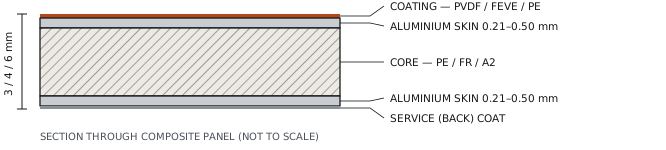
Polyvinylidene fluoride coating. A 70 % PVDF resin system is the standard high-durability façade coating.